I don't have any kids, so I don't really feel comfortable telling folks how to raise theirs.
But I will tell you my perspective.
As someone who grew up in the "be back home in time for supper" 1970s, today's world seems completely foreign. When I started kindergarten, Mom walked me to school on the first day so that I'd know the route. And after that I walked to school on my own until I learned to ride a bike.
I rode to junior high, where there was parking for hundreds of bikes. Recently I drove by that school, and the bike racks were gone. This whole concept of waiting in traffic to pick up or drop off your kid wasn't even a thing.
And I'm so supremely grateful that I was raised that way. I'm absolutely certain that early autonomy paid off later in life in countless ways.
I'd encourage you, if you're raising kids, to consider the upsides of so-called "free range". Or, as we called it in the 70s, "being a regular kid".
> Recently I drove by that school, and the bike racks were gone.
This is the thing: the bike racks are gone because so are the kids walking/biking to school. If you let your kid do it, they'll be the only one. I walked to school in the 80s and there were lots of kids in my neighborhood walking to school at the same time. That's a very different experience. I also lived in a neighborhood that was laid out in the early 1900s. How many more kids are in car-centric culs-de-sac today? Some of these streets don't even have sidewalks. They're not even safe for adults to walk on.
You can't combat this enormous societal change by making an individual effort to let your kids do more by themselves. Their physical and social environment is very different from what it was like when kids did that.
I guess it depends on what part of the 1900s... I grew up (also in the 70s&80s) as a "latchkey" in an area that was built in the 50s and 60s and had the same experience of walking and riding to school. This seems like a "reality TV" phenomena of the last 25 years. Certainly, there are suburban deserts that are completely unwalkable, but most housing is not like that (certainly not "affordable" housing) simply because it was built earlier. Of course this is almost entirely dependent on where you live.
High growth Tech areas like Seattle, San Jose, Austin, Phoenix are ~10x bigger than they were ~40 years ago. So those are much more likely to have this low density housing than Boston, SF, NYC.
What I find weird is that even completely walkable schools/neighborhoods have parents that almost all drive kids to school every day. Parents legitimately worry about being labeled as endangering their kids, if they don't drive them. Interestingly for me this is more acute for immigrant families, who are worried about fitting in, than local families who will tell the vice principal to "shove it" when warned about the dangers of walking to school.
Does the remark about immigrants make sense? The typical immigrant can't be more concerned about fitting in that the typical native. Because the typical native's behavior determines what "fitting in" means.
There is a saying in Ireland called "More Irish than the Irish" and refers to immigrants and non-locals who take up all of the local culture to extreme (compared to the average) levels.
Immigrants are statistically the most law abiding and often times, even conservative, members of a a community and it probably is one measure of long-term survival (esp. in the U.S. while living under the microscope of a work visa) so they need to go to great lengths to fit in and avoid even the appearance of impropriety - something the natives (and in all likelihood their children, if raised there) would take for granted. Meanwhile local citizens gather on the street corner protesting mask wearing or whatever nonsense they feel like.
Similarly, the Jewish Talmud considers "Ba'alei Teshuva" — Jews who either were born not-religious and became religious later, or who were born religious, left the community, and later returned — to be generally more "righteous," aka, rule-following, than people who simply grew up following the rules of the religion. Part of the explanation given in the Talmud is that Ba'alei Teshuva made a concrete choice to follow the religion's rules, whereas someone who was raised in that environment and never left is just doing what they feel is natural.
Outsiders (after a few years) are more aware of in-group rules since they don't feel natural, and for those there by choice — whether it be immigrants to a different country, or the newly-religious — presumably they're there because they want to be a part of the group, rather than taking it for granted. So they're often both hyper-aware of the rules, and place a higher value on them.
Not true in Western Europe.
They are heavily overrepresented in crime statistics and their own communities have grown big enough that there’s no need anymore to try to fit in.
> They are heavily overrepresented in crime statistics
Judging from my own anecdotal experiences as someone who "doesn't look like a German", i'm willing to take a wild guess why: Because everything they do is under a microscope.
I got my bags searched, because i "walked suspiciously through the isles" in a store (woman thought i'm a foreigner) and i got a false accusation by a police officer who said he "knew people like me".
Also the German BKA crime statistic, as an example, shows reported crimes. It doesn't exactly show how many where actually convicted. So i guess i'm also somewhere in the stats from a few years ago.
Research shows that even corrected for what you’re describing the numbers still show an overrepresentation compared to their % of the population. Just an example, they were 63 % of prisoners in The Netherlands a couple years ago. Similar numbers in other Western European countries.
What follows is a generalisation from the Australian experience (my experience - I'm a child of first gen migrants i.e. a 2nd generation Australian). For the first generation and some of the second generation this is true. Migrants often don't know the language, and don't have pre-existing connections in the community, so they tend to cluster in areas where there are more people like them (often cheaper places to live). Working, they are more likely to work for other migrants, prolonging the "bubble" and deferring the need to integrate. This generation tends to live productive if somewhat fearful lives - "look at those locals with their degenerate customs!", "They don't like us!", "Be careful! Don't trust them! They'll take advantage!". These attitudes are of course almost exact mirrors of what the locals thing about the migrants. Attitudes primarily born of ignorance and lack of first-hand experience with the "other".
The second generation - children of first gen migrants - go to school, the local language is the one they're more proficient with. Perhaps its true that this generation feels the weight of anti-immigrant feeling more than any other. Mainly because inside, they don't feel that different. They grew up here, went to school here, understand the local culture. They straddle a cultural divide. They bear the weight of anti-immigrant feeling as well as the parental expectations to stay within their original cultural norms. This is rarely achievable. This generation often achieves well due to the over-emphasis on "Get an education! We never had the chance! You have opportunity! Don't squander it!" They feel the burden to do better than their folks very acutely. For those that can't achieve academically, or in business, or in sport - they are easy prey for ethnically aligned gangs. They can "retreat" into their origin culture and use anti-immigrant sentiment to justify bad behaviour.
By the third generation (e.g. my kids), a lot of the anti-immigrant feeling has moved on... to the new groups of migrants. My parents came from Southern Europe to Australia in the 60s. They were the "wogs" and "dagos" of the era. I remember being told in primary school to "go back where you came from!", which confused the hell out of me because I was born in Australia. Now, people from my ethnic origins are considered part of the wallpaper here. No one thinks of them as anything other than Australian (ok, maybe a handful of hardcore racists). In the 70s, the southern Europeans were replaced as the anti-immigrant bogeyman by the Vietnamese. Then the Lebanese. Then the Somalis. Then the Syrians. With each wave, the crime wave moves to a new group. Within a generation (or at most 2), any such spikes have dissipated.
As a fellow aussie with caucasian lineage from 1800's I grew up a few generations on the "already settled" side of this equation. I'd like to think I'm not racist but I struggle with being a product of my environment in a competitive world too. Your insight is appreciated.
The only other weird thing is how immigrants can pick on each other as much as any racist aussie seems to. I would have thought having gone through it would make people more sensitive to flinging that crap. But I guess the "product of environment + competitive social pressures" gets to us all.
Haha indeed! Plenty of racist immigrants, more so among 2nd/3rd generation (then it all becomes a bit of a blur). It still churns my stomach to hear adult children of migrants - some of my peers, who themselves have done quite well - making disparaging comments about newcomers e.g. "they live on top of each other!", "they don't make an effort to assimilate!" etc - forgetting that they are describing the stories of our parents and grandparents (many of whom can still barely speak English). People have short memories and little empathy for "others"/"strangers" I guess.
I think the frustration of "competitive social pressures" combined with a desire for "simple solutions" is an achilles heel that gets ruthlessly exploited by fear mongers and outrage merchants, who use racist dog whistles to translate the resulting fear/anger into political capital. It appeals to the reptilian/emotive parts of our brain, and is very, very hard to shift via appeals to reason.(Don't know about you, but I can't wait for this election to be over just so I don't have to see another UAP billboard or cop another UAP robocall).
That second paragraph resonates. Particularly "simple solutions". To some degree I wonder if the modern pace of change is a destablising force in peoples lives too, which is why they want simple solutions.
With UAP, irksome as they are, I take consolation knowing the money they spent to reach me is money wasted and not spent reaching someone else. Somewhat spiteful I guess, and not healthy but is what it is.
> Not true in Western Europe. They are heavily overrepresented in crime statistics and their own communities have grown big enough that there’s no need anymore to try to fit in.
you can't just say something like that without any supporting facts.
> who take up all of the local culture to extreme (compared to the average) levels.
What does this mean? My dumb brain goes straight to “even more alcoholism and fighting” but that might just be on account of being Irish diaspora myself.
The best example I heard from a friend who was a recent immigrant from India.
He had quite a few friends who were the children of immigrants who arrived from India a generation earlier.
When my friend’s parents visited (from India where they still lived) they were shocked when these 2nd generation American-India kids greeted them in a super formal way that had disappeared in India decades ago.
Basically the immigrants to the US held onto old customs more strongly than the ones who never left India. And they passed that onto their kids. So they were “more Indian than people from India”.
The "more Irish than the Irish themselves" phrase originated as a description of mediaeval Irish history. Norman-ruled England conquered Ireland, and introduced Anglo-Norman settlers – Irish society became divided into two social castes, an English/French-speaking ruling caste and a subordinated caste of indigenous Irish-speakers. (This was prior to the Protestant Reformation, so everyone involved was Catholic – indeed, the English monarchy's conquest of Ireland was approved by the Pope.) The English became concerned that, after a few generations, the Anglo-Norman upper caste began to speak Irish and intermarry with the native Irish-speakers – they saw (quite accurately) that this would lead to weakening of English rule and eventual demand for independence. "more Irish than the Irish themselves" was really meant as a somewhat hyperbolic/ironic reference to this process of cultural assimilation. The English responded with anti-Irish legislation, prohibiting the speaking of Irish, intermarriage between English-speakers and Irish-speakers, and formally subordinating the theoretically independent Irish Parliament to that of England – however, the legislation largely failed to be enforced, the blurring of the boundaries between the native Irish and the Anglo-Norman newcomers continued, and English rule became (in much of the country, especially the parts furthest from Dublin) more theory than fact, as local lords found they could basically ignore the edicts of the English administration in Dublin and do whatever they liked.
This is arguably the earliest historical roots of the Northern Ireland conflict, although with various other layers added on top – the introduction of a religious dimension to what was originally a purely cultural/ethnic/linguistic/political conflict due to the Protestant Reformation; further waves of settlement from Britain; the Irish theatre of the English Civil War and the later Jacobite-Williamite War in which many Irish (especially, but not exclusively, Catholics and Irish-speakers) supported the deposed King James II against the regime of William of Orange.
I don't know how much sense the phrase has in the context of immigrants to contemporary Ireland. I suppose some users of it must have found some way to connect it to contemporary affairs–probably there is some immigrant somewhere who is obsessed with teaching their children to speak Irish when the majority of Irish people don't make much of an effort to do so themselves–but I think some use of it may also be motivated by its long history and memorable phrasing rather than genuine contemporary applicability.
There are many cases of immigrants saving the life of small children in trouble. Men are brain-wired to protect and rescue any children in distress. The problem is that we slowly assumed that other people is dangerous or insane by default just by a few outliers and just to be sold things.
And that when you progressively restrict what people can do in a society, or everybody feels watched and judged 24/7, at some point you will start to encourage perverted conducts of escape.
If you live downtown you are unlikely to have a grade school in your area from what I can see of any American cities. Families with school aged children don’t tend to live in the downtowns. Older suburbs are much more walkable in terms of kids walking to school with sidewalks and fewer vehicles than an urban center.
I grew up in a fairly large and fairly dense (by suburb standards) suburban city of Boston and it was quite walkable as a child (and also had the benefit of having a few MBTA stops). I live in the middle of downtown Boston now and while I find it fantastic as a somewhat immature adult, I wouldn't say it's especially child-friendly.
That being said, I have seen many other suburbs (looking at you, various places in Connecticut) that don't even have sidewalks. That cannot be good for anyone. And Boston certainly has more child-friendly neighborhoods as well.
You can ask your DOT to close the street in front of the school, but, at least where I live, even if they are supportive it is likely that your child will be out of school before something actually happens. Increasing the density of an area also takes years or even decades.
Heh, my neighborhood doesn't have sidewalks and it's very safe to walk in because _everybody_ walks in the middle of the street. Can be frustrating when you drive through sometimes, but I'm always mindful of the great benefit this has. Everyone in the neighborhood sees and expects people (and kids) "playing in traffic", so traffic is relatively quite calm. I've developed a bit of the view that sidewalks turn neighborhood streets into freeways. I can imagine many scenarios where this system wouldn't work as well, but in a SFH residential neighborhood without much in the way of through traffic, it works pretty well.
Yeah. In residential areas you shouldn't need sidewalks, but it requires that the street is designed for it. It must be narrow, trees along the street or other street furniture helps make it appear even narrower than it is. Naturally drivers will slow down.
In Germany we have the concept of a "Spielstraße" (translation: Playing Street?), where walking speed is the max. accepted driving speed and playing kids have the priority in everyway. I grew up in one, it was great!
I assume you mean they don't know enough yet? You can improve their state so that crossing the street is quite safe. What do they need to know to avoid being a pedestrian fatality? Here are the top three things.[0]
1. Don't walk under the influence.
2. Don't walk at night.
3. Only cross at an intersection.
I’m going to assume you misinterpreted the GP. I read “their current state” as referring to the roads, not to the kids. For example: lack of sidewalks, roads with high speed limits, distracted drivers on phones, lack of other children walking.
++ A lot of people in this thread either live in wonderfully walkable places or have simply never actually tried. Y'all, Google Maps giving you walking directions is not the same thing as walkable lol.
The local high school where I grew up was not exactly walkable. There were multiple uncontrolled crossings (with speed limits over 30mph) and missing sidewalks all over the place that force you to walk on the shoulder/in the gutter.
That's not particularly relevant to this discussion because walking under the influence is not a major contributor when children are hit or killed by drivers.
Children also have different risk factors, for example many trucks and SUV drivers have poor visibility and cannot see sufficiently short road users that are close to the front of the vehicle, for example when stopped at a stop sign or traffic light.
Worse yet, most cars now are lifted high enough to where the block line-of-sight for pedestrians and cyclists (and even people in reasonably sized sedans and compact cars) from being able to see oncoming traffic from an intersection when they’re parked on a corner.
This is pretty much it. I'm a parent now, but I recall my parents telling me to walk to get to appointments and activities when I was in school back in the 90s and 00s. I never did, because it was 5+ miles through car centric roads.
In the city, I see kids walking places on their own. Most places they would go are within a quarter to half mile, all of the schools that they could go to from age 3-18 are within a third of a mile.
I mostly agree. The majority of neighborhoods in the US are designed to support enormous vehicles driving as fast as they can and are therefore an unnecessarily hostile environment for everyone else. I would not choose to risk my children walking on their own just to make a point or "be the change" in a place like that.
However you can choose where to live. there are still plenty of walkable neighborhoods in cities, suburbs, small towns, etc. The issue is that you will have to find them and then you will have to pay more for the privilege of living there.
With respect to finding them, we used national commuting mode share and various websites to pick a handful of regions that had a reputation for walkability, spent a bit of time on Google Maps, called the schools to inquire about their mode share (e.g. percent of children who walk/bike minus the percent driven by parents), chatted with the folks who run the state's Safe Routes to School program, and rented an apartment while we spent a couple months biking around the candidate neighborhoods/towns, especially during rush hour.
With respect to cost we were priced out of the really walkable areas but were able to find something where many kids walk or bike to school on their own in our price range. Based on price premium for walkable areas it seems that a lot of home buyers prioritize the same things we do but not a lot of new neighborhoods are built to prioritize walking. It felt like there were a lot of people competing for a relatively fixed pool of (typically old) neighborhoods.
I think it's also a result of car ownership. It wasn't until the 1980s that multi-car households started being really ubiquitous.
I imagine people slowly started driving their kids to school because they could, which led to other people driving their kids to school because walking/biking was unsafe due to all cars on the road.
My childhood in the 90s kinda sucked by comparison because I was in small neighborhood with no kids my age locked in by a busy road that was too unsafe for me too cross on my own.
To add to that - the way we do sports and extracurricular activities is absolutely mind blowingly different now, too.
Back in my day, neighborhood kids played baseball and football and basketball together as they could. Now everything is structured and scheduled. There are travel teams for kindergartners. There is a coaching structure for 5 year olds. Kids play for competition, winning, and opportunity, not just for fun.
Maybe this is just me being old, but it's very depressing. It adds a layer of pressure to childrens' lives that just doesn't need to exist. Parents complain about it, I can't imagine it's healthy for kids, but it still exists.
Getting the kids into structured, college-application-fodder activities early enough, so that the kids can get into Stanford and get a job that pays enough so they can repeat the cycle of abuse, err, pattern of success with their kids.
> Getting the kids into structured, college-application-fodder activities early enough, so that the kids can get into Stanford and get a job that pays enough so they can repeat the cycle of abuse, err, pattern of success with their kids.
Those of us who grew up poor are eager to make sure our kids are on a path for success.
Working hard at the rat race sucks, but it sucks a lot less than the alternative.
There are exceptions, though. I wound up being a track and field coach for kids aged 6-9 in the local athletic union.
Much to my surprise and delight, the culture from the national association and down is that kids this young will NOT compete in the traditional sense - sure, they may join local games, but the results will not be published in ranked order, and everybody gets a medal.
During training, coaches are encouraged to focus on the competition with oneself - 'Good, you long jumped 3" longer than you've ever done before!' Rather than 'Wow, Anna jumped longer than everybody else!'
It can get serious later on. When they're kids, let them be kids and have fun.
(This, though, is in egalitarian to a tee Scandinavia)
Isn't competition with oneself also detrimental at that age? It puts them under the pressure of constant improvement from their previous best. Shouldn't the process be just letting them build a habit/system and enjoy the process rather than focusing on personal records?
What balance we've struck is that coaches keep track of their results - say, to the nearest 4 inches in the long jump pit, we've labeled the edge in 4" increments and see how they fare without making a fuss of it.
Then, at the close of the season, we typically note that everybody has made significant progress, and then it's time for 'Listen, Ken, when we first started outdoor season, you jumped here - and now (big stride!) - now you jump HERE.'
I would be most surprised if any kid felt under pressure to improve from their previous best; however, kids, like adults, tend to like both to make progress and to know that others notice, too.
They aren't going to make that High School sports team if they aren't practicing while still in diapers.
In the old days schools were small enough that pretty much everybody who bothered to show up could make the team. These days they have to turn away most of the kids and the level of play is much higher. Academics are the same way, if you want your kids in the good school they need to be hounded throughout their entire childhood. If you want to see this in action, just check out the parents who were apoplectic over the change in admissions policy at Thomas Jefferson High School. They kept their kid under huge pressure for 15 years and suddenly some slackers that even played outside in unstructured activities might make it instead?
A major difference between when I grew up and now is the prevalence of the severely mentally ill living on city streets. Would you send your 5 year old self down the streets of San Francisco or Seattle? As a 45 year old I’m frightened often enough - I can’t imagine my daughter being forced to navigate those situations alone. The assault and murder rates due to the untreated mentally ill in the cities I’ve lived in is high and visible.
In the 70’s and 80’s we still had a functional mental public health system an a relatively small population living on the streets.
Case in point a clearly disturbed person walked into my daughters school grounds and began exposing himself last week. The teachers corralled him and the police took him to jail, but they said more or less he will be back in a week or two and to be more careful securing the school grounds.
If that’s the environment at school, what about the sidewalks and streets between home and school?
"Would you send your 5 year old self down the streets of San Francisco or Seattle?"
Yes.
We live in San Francisco, and our kids went to a daycare in the Civic Center. We walked [with the kids] by many homeless people every weekday for years. Our interactions with them were almost universally positive; they'd clear the sidewalk to let kids through, try to keep kids from seeing drug use, chat and share candy, etc. On cold days when our kids would refuse to wear shirts [love that young metabolism], homeless folks would yell out, "Put a jacket on that kid!".
Most homeless people are just people in terrible situations, not boogiemen to be afraid of. Sure, some of them are mentally ill--if they weren't when they became homeless, it can make you so--but that doesn't make them dangerous.
Every assault makes the news, but cities are safer than they've ever been, and I'm very glad to be raising my kids in SF. The public transit and density of services will give them much greater autonomy than if we lived somewhere where you need a car to get anywhere.
My older kid's first errand was at age 5.5, to get a loaf of bread IIRC, from a market 1 block away, crossing 1 street. He was stopped by the police. The cop told him to tell his parents that he was too young to be out alone. No CPS, no arrest, fortunately, and he let my kid complete his errand alone, but that's the biggest danger around our neighborhood, not the homeless. We're not in the Civic Center, granted, but we're still in SF proper.
> Every assault makes the news, but cities are safer than they've ever been
Reminds me of one of my favorite pieces of data.[0] Pew tracks both crime rates and perception of crime rates. There's been an overwhelming declining trend crime (especially violent) in the past 30 years. But if you look at perceptions of crime, people think year over year it is on the rise. There's even a bias that it is on the rise more nationally rather than locally. What I like about this is how it shows the biases that we develop. You're right that _every_ assault makes the news (also there's 350m people in the US, even a 1 in 10k event is likely to occur frequently at the national level). Also, pareto plays a role. Most crime is limited to a few states, and really just a few cities in those states, and even more so specific areas within those cities (pareto is fractal in this way). We humans are typically bad at risk analysis.
I should add to this that I grew up and walked to school in the 90's. So it is safe to say that me walking to school as a kid was statistically substantially more dangerous than it is for kids to walk to school today.
I was recently chatting with a friend who (like me) grew up in the 90s and they were reminiscing on how great walking to school was because “you could do that back in the day.” They then went on to say that they would NEVER allow that for their children “these days”.
I pulled up the Pew study and it blew their minds. That said the news cycle, perception, parental instinct, etc is too powerful and fear (however irrational) is extremely powerful. After the initial shock they thoughtfully considered it and essentially said “Well, whatever. The kids are still never going to just walk around outside.”
Those kids are never going to be out “in the wild” even though it’s substantially safer today than it was in the 90s when we were doing it.
It is an interesting response to me (without kids) because I think this doesn't give kids the chance to explore. Kids SHOULD be doing dangerous things, just not TOO dangerous. That's how I learned a lot of valuable lessons. It is also how you learn independence.
Crime stats are a difficult thing to make comparisons with between jurisdictions and over time. I grew up in 1980s NYC. They flat out didn’t respond to take reports for certain types of crime, and may deliver a beat down to some weirdo following kids around.
Unless it’s a clearly serious felony like a murder or burglary, you aren’t really getting any information.
I would say that what people worry about is random freakshow people and the petty crime form other kids or teens. Folks are more aware of the freaks, and the evidence of in front of them that there are consequences for most petty crime.
We walked to school about 12 blocks in those days. It was fine. I live in a small city today; my kid won’t bike to school alone until about 12, mostly due to traffic issues and idiots riding ATVs in the afternoon.
> Unless it’s a clearly serious felony like a murder or burglary, you aren’t really getting any information.
Good news! The numbers reported in my citation are specifically about: Larceny/Theft, Burglary, Aggraveted Assault, Motor Vehicle Theft, Robbery, Rape, and Murder/Non-Negligent Manslaughter. Every single one of these has drastically decreased since the 90's (90's increased in crime since the 80's but current levels are below that).
I don't mean to sound sarcastic, but I can't but help but feel that this could have better been resolved by clicking on the citation I included.
It’s kinda hilarious that you’re chiding me for not reading the link when you didn’t read the comment.
Those are index felonies, and have nothing to do with walking to school. Quality of life crime, non-criminal bad behavior, sidewalks, and traffic hazards all have more impact and aren’t measured in a uniform way.
In fact, I’d argue that there’s an increase in petty street crime as policy has changed and we no longer pursue most minor stuff as it makes stats look better and pts lip service to various social goals.
I'm sorry, it's difficult to take your responses in good faith. You first start by saying that you can only meaningfully measure violent crimes and burglary, which I pointed out were the measurements in the citation. Now you say that those don't matter and that petty crime has increased based on gut feelings. But by your own claim that's impossible to measure accurately. You put me in a spot where you've said that no data would be convincing to you. I think that's the end of this conversation then.
I interpreted the comment you're replying to such that while the statistics for the serious crimes show a marked decline, parent are not only concerned about those crimes when letting their children walk alone to school and we have poor data about less serious crimes.
My comment was two parts. 1) that crime overall is decreasing. As far as I can tell this is true for every measurable metric. The only two I'm aware of that aren't are opioid use and sexual assault. Though the latter one isn't commonly believed to actually be increasing but just higher reporting. 2) that locality of crime is non-uniform. As a kid we knew which areas of town not to go to alone. Stay out of those parts of town and you'll be fine. In addition to this, most crime is not evenly distributed across the country and your suburban town isn't that dangerous. I'll strengthen my claim even more though, though this still isn't controversial. The richer your zipcode, the lower the crime rate. I think what people in this thread are more discussing is wealthy suburbanites picking their kids up in Teslas saying it is too dangerous to walk. No one is questioning the same sentiment for kids in Detroit or the bad parts of Chicago.
> Most crime is limited to a few states, and really just a few cities in those states, and even more so specific areas within those cities (pareto is fractal in this way).
What is that based on? Some tangential data leans in the other direction: The most recent FBI/DoJ report (that I'm aware of) said recent increases in gun crime were spread pretty evenly, urban and rural, across the country - though that's just one kind of crime, and only the increases. Another report said crime is worse in 'red states' than 'blue states', and the latter tend to have larger cities (I think). Hardly conclusive data, I know, and I'd love to see some.
This is pretty common in pareto distributions. Here's a heat map from 2020 data with state level resolution[0]. You'll notice that crime is in fact not evenly distributed (my claim). Here's a similar map but with county level precision[1]. And here's a heat map for crime in San Francisco[2].
Nothing I've stated is really that controversial and is pretty well known by anyone that looks at crime statistics. I think it is also relatively easy for the average person to buy because everyone knows where "the bad part of town" is. Really that's all I've said. That "the bad part of town" exists fractally. There's the "bad states," "bad cities," "bad counties," "bad towns," and "bad parts of towns." I think this all should be rather unsurprising.
To clarify on your FBI/DOJ statement, this doesn't have to be in disagreement with what I said. You can have increases in violent crime over the last year (or even 5) and a dramatic decline in the last 30. The Pew study that I cited does specifically look at violent crime and uses FBI statistics. But let's add more. Here's a DOJ 1993-2011 showing a large decrease in both fatal and non-fatal gun violence[3]. Here's a Reuters article that shows homicides (and the pareto effect I mentioned above) from 1980 to 2019[4]. Notice the trend towards declining (I never said it _strictly_ declined).
Thanks for doing all the research. I will keep this tab open and catch up on it later. One comment:
> Nothing I've stated is really that controversial and is pretty well known by anyone that looks at crime statistics. I think it is also relatively easy for the average person to buy because everyone knows where "the bad part of town" is.
'What everyone knows' is not knowledge; that's why we need data, research, etc (which you have amply provided). Look at what BS people 'know' about all sorts of things. IME the 'bad part of town' is usually not so bad, if at all, and it's often conflated with race.
I think the standard has changed, right? People want everything nerfed up. We have helmet laws where there used to be none, you can't use the Uber app without being bombarded with messages about 'safety', kids aren't left on their own outside. The mentality is that the world is scary - if not outright ending - constantly a threat. We wonder why we're raising kids with anxiety problems.
Sometimes it does. I like not needing a car in SF too, but I do notice my kids being affected negatively after seeing a violent deranged person. I bike the long way to school instead of walking because it was impacting their mood so much. Maybe your kids deal with it better than mine, or maybe you're just not noticing how it's affecting them?
I grew up in a 3rd world country (now I live in Europe) in a city that by HN comments seems similar to SF (big and full of harmless homeless people/drug addicts everywhere). I remember when I was a kid and I was with my mother I stared to a homeless man for some time. Of course he just seemed peculiar to me, I was a little kid, but this guy got mad and screamed "Do I owe you money or what? why do you keep looking at me?"
My mother grabbed me in her arms and we just went away quickly. She told me to not look at homeless people for so much time. Of course I was very scared, I don't remember exactly how old I was but I still remember the episode some decades later.
Maybe it's a cultural difference between where I live and where you live, but it's definitely not normal for people to get mad at a child for staring. They're fairly inquisitive by nature.
> Our interactions with them were almost universally positive; they'd clear the sidewalk to let kids through, try to keep kids from seeing drug use, chat and share candy, etc.
With an adult present, sure, but holy moly would I not leave my kid alone around drug users offering candy and a chat. Hell, I might be one of those hypothetical CPS callers that everyone is worried about if I saw that taking place!
As someone also living in the Midwest, what's your issue with it? A bunch of people are doing a thing. They see a kid. They stop doing it while the kid is in sight, so they're spared seeing it.
What could possibly be the issue? If anything, it demonstrates Midwestern values pretty well: Freedom, and a moral, not legal, code that people voluntarily follow to prevent kids from being exposed to potentially-harmful things, without any government needed to enforce it!
If anything, it's more considerate than where I live, where people will openly smoke in front of children, which is arguably more harmful, because smoking has second-hand effects, unlike intravenous drug usage.
> As someone with kids and living in the Midwest, I just don't even have the words to describe my reaction to this. Wow.
I'm not sure what you mean: Do you live in a large Midwestern city, like Chicago, and have different experiences? Do you live in a suburban or rural environment and are surprised to hear it?
Personally I spend lots of time in cities and I'm not surprised. If you don't have experience there, realize that the horror stories fit a long-term political campaign to denigrate cities in 'blue states' (note that you don't hear anything about crime in Miami, Houston, etc.), which are a political power base of a one party.
OK, since some folks have commented on the candy thing:
That was a one-time event, on the Muni, with both parents there, and with the giver asking our permission to give our son a sealed lollypop. I don't recommend kids take candy from strangers without parents there, but I do talk to strangers in front of my kids, and encourage them to also.
I don't tell my kids that all strangers are dangerous. First, because it leads to a culture of fear and disrespect. Second, because I obviously don't act as if they are, so it would lead to distrusting my advice.
They have to learn the difference between "stranger who seems reasonable and nonthreatening with whom you can casually chat" and "stranger telling at clouds whom you should avoid". They figure that out pretty young, if you let them.
I'm also not a parent so I'll join the top-level commentor in not telling you what to do, but I know that I personally will draw the line well short of letting them share a homeless stranger's 'candy'!
(Related but not exactly a reply - I think this is a fairly uniquely North American phenomenon, my experience in the UK in the 00's matches these American 70's etc. experiences, and I see no sign that it's changed here. More evidence that it's to do with the way towns are structured I suppose. Or 'towns' - you don't really have them and that's the problem.)
As a parent, I wouldn't do this in busy areas. I've seen people get hit from drivers running stop signs and red lights. I have to look at drivers turning right on red to make sure they see me, not sure that all children are tall enough to do this. Too much of a risk.
It doesn't take too much searching to find examples of horrible accidents:
Motor-vehicle crashes account for 20%[1] of child and adolescent deaths in the US.
I'm not nearly as terrified of strangers or homeless drug users as the legion of SUV drivers scrolling on their cell phones. Distracted drivers are several orders of magnitude more dangerous and several orders of magnitude more common.
>Motor-vehicle crashes account for 20%[1] of child and adolescent deaths in the US.
Yep, 20% of something that almost never happens. .025% of adolescents die each year, .005% of them due to motor vehicle crashes. Further, the paper suggests most of adolescent vehicle deaths happen as passengers and/or drivers.
Note that this number only includes fatalities. Injuries are typically a couple orders of magnitude more common than fatalities (both for bystanders and occupants) but they are harder to count as they are not tracked as consistently. Besides the lasting damage, in a place like the US they can be financially ruinous for a family.
(I would be interested in statistics that break out bystander vs occupant and injuries as well if you know of any.)
Finally, I'm not quite sure what your point is with respect to the overall fatality rate of adolescents. It should not be particularly surprising that the vast majority of children survive into adulthood in modern times, but that doesn't mean it's not worth continuing to take precautions against the most common sources of injury and death.
I've been involved in various "free-range kids" groups and kid-friendly maker spaces where children can learn to responsibly use power tools. But I've never met a parent who decided not to bother protecting their kids from the most common sources of injury or death just because childhood deaths "almost never happen". Frankly I'm not sure I'd let someone with such an interpretation of statistics anywhere near either kids or power tools.
>Finally, I'm not quite sure what your point is with respect to the overall fatality rate of adolescents.
By saying "20% of adolescent fatalities are to vehicles" you make it seem like a terrifying threat. It's not. Certainly not worth keeping your child from walking outside.
You're involved in groups that teach kids to use power tools safely. As in you let them use power tools despite there still being a risk after taking such a class. Do the same with regards to vehicles. Teach them how to stay safe as a pedestrian, passenger, and driver.
Right on red has massively increased pedestrian fatalities. The “research” claiming to show it was safe was so shoddy it’s fair to just call it fraudulent.
Honestly I’ve never seen it as bad as in certain parts of Seattle. The meth use is very readily apparent and it has people behaving way out of line and highly erratic or aggressive.
That said, I still worry more about car traffic and reckless drivers than the homeless. But having aggressive people on drugs yelling at passers by is not an ideal or safe environment for kids to be in. For one thing, it distracts the people in cars. . .
While there has been a rise in violent crime in the last few years, which is bad, Seattle is still less violent than it was historically. Right now, we're at approximately 2006 levels of violent crime:
> It's pretty stable, though, and the rise isn't actually that large (just about at 2008 levels, and far below 2004 levels):
I walked through Cap Hill and DT Seattle to catch a bus at 2am back in 2003. No worries at all.
A lot of crime isn't reported now days, e.g. my mothers truck just got stolen and she is not going to report it because the police are likely not going to even bother talking to her about it. I've had plenty of friends with stolen cars where the police told them "well you should be more careful with your car" and up and leave.
That sort of attitude sure makes the crime stats look good though.
> How is your mother going to make an insurance claim for a stolen car without a police report? Or is she just going to eat the loss?
It is a 1992 ford ranger, in theory worth a fair bit in the current used truck market, but insurance will value it at next to nothing, so I presume she'll eat the loss.
I don't have comprehensive insurance on my old car, so insurance wouldn't pay for it being stolen.
The reason is pretty simple. The comprehensive insurance premium adds up to more than the car is worth.
Also, the way insurance works, is your rates go up to reimburse the company for payouts to you. Insurance is only worthwhile for losses you cannot cover yourself.
This is why downtown businesses have largely stopped reporting shoplifting to their insurance companies. It just makes the losses more expensive.
The chief difference is that the segment of the media dedicated to keeping people fearful, particularly of their neighbors, is enormous now. It was always the case that media liked stories of conflict, but this was moderated by a sense of propriety and responsibility to the community. Now, certain voices have enormous megaphones and no restraints and the paranoia and anger they are actively promoting against their own society has taken root generally.
My wife grew up in the city, and I grew up in the country (not the pretend 'doctors commute to the city and have 10 acres they pretend to farm and raise horses on' but 'white trash, holy shit there's no work' county) and my wife is HORRIFIED by how much violence and random crime there is where I come from. My family still asks how we can live in the city since its so dangerous while meth heads are stealing anhydrous ammonia from fertilizer tanks and will shoot you without blinking if you get in their way just down the street from them.
Yep. Born and raised in a picturesque small town. Went on to live in cities.
I know more than a few people in my small town who got arrested for burglaries and robberies. I know a lot of victims too. Rape basically isn't reported because if the neighbor's boy gets in trouble, that'll ruin the relations between half the town. There are the town drunks who got pulled over more times than you can count and eventually killed someone in a car accident.
You're passing by hundreds if not thousands of people in a few hours in a city. A methhead dancing naked on the street corner is going to catch your eye. The thousands of normal people won't.
In a small town, you're not seeing anyone at all some days. Maybe you're just passing by 5 cars. The opportunity to witness anything is lower.
Of course, plenty of small towns are nice and safe. But the ones that have any problems are proportionally going to be way worse, due to lower population.
If it's anything like my experience in a rural town, they'll bemoan the dangers of the cities while Tom's kid got into meth and conned/robbed ten people they know, Dick's kid goes to the bar every night then drives home drunk to beat his family, and Harry's kid was hiding that he had HIV to sleep with several women in town.
Yup. My best friends dad would stop at the gas station every night after his shift (2nd shift at a foundry) to get a 6 pack of Labatt that he'd drink while driving home, get home and keep drinking. On a good night he'd smoke, drink more beer and eat warmed up dinner. On a bad night, he'd come home, keep drinking, and get into it with his wife and smack her around for awhile.
As an adult I realize why they always wanted me to stay over was he wouldn't lay into them while I was there. He'd just leave and go to brothers house. Or as we found out later, his girlfriends.
> The chief difference is that the segment of the media dedicated to keeping people fearful
Also, there is the Citizen app. I wonder if it's driving perception more than anything else. When I've talked to people in safe cities who nonetheless were ranting to me about crime, I've asked them if they have Citizen, and very many do. Not strong data, but I would love to see some research.
Safer than what? Suburbs with nice sidewalks and tree lined streets and friendly neighbors who know each other? Safer than rural areas where everyone knows everyone and there’s enough law enforcement to work on a 1:1 basis? I’m sorry but this just seems like an absolute nonsense claim.
To reply to anecdata with anecdata my experiences with suburbs have been a complete lack of sidewalks in favor of cars and neighbors not talking to each other except in the form of HOA violation notices. For the country, where I grew up, everyone did know everyone else, but that was only a benefit if you were friends with the town sheriff. Good luck taking a walk anywhere when the local hooligans would charge at you with their lifted pickups or roll coal right next to you, and the sheriff threateningly asking you if you are starting a problem when you try and file a complaint
The comment said cities are safer now than they were before, which is true.
> Suburbs with nice sidewalks and tree lined streets and friendly neighbors who know each other? Safer than rural areas where everyone knows everyone and there’s enough law enforcement to work on a 1:1 basis?
No, no real place can possibly be safer than a fantasy land.
If so, I live in that fantasy land. Except, we never see any on-duty law enforcement, as it is virtually never needed. The neighbours that are police work in the city.
I've been living here for 10 years, and I've seen 2 on-duty police cars so far, one was on the first day of school several years ago, when they stopped every car on the way to school/day-care to make sure seats were safe, and one was due to a traffic accident where an electric scooter had hit a car.
My third grade daughter has been walking/cycling (depending on weather) the 2km trip to school for over a year, with a friend, but no adults. The benefits are considerable, both socially, physically and emotionally. 4km/day on top of normal playtime and sports is a nice exercise boost. Spending time away from adult supervision strengthens friendships and boosts self confidence and mental stamina.
Sometimes I miss the city, but for the freedom of my kids, living where I do is night and day in terms of safety and health compared to where I lived before.
> Safer than rural areas where everyone knows everyone and there’s enough law enforcement to work on a 1:1 basis?
I remember talking to one farmer who said he had a gun because, where he's from, the police are only there to clean up. They can't get to a crime scene in time unless they are lucky to be nearby, and have very few resources for investigations or other operations.
Have you lived in rural areas? Despite the romanticism portrayed in the media around rural live, it's absolutely not like that. It can take an hour for police to show up when you call them, if they show up at all. Most of the people in your area are probably on, or cooking meth. Crime is just as bad, and often more violent than it is in the city. Sure, people aren't stealing your bikes, but they are stealing parts from your car. They're stealing your air conditioners. They're breaking into places and ripping the wiring out.
In general, I worry more about crime when I'm in the country, than when I'm in a city.
No. There are some rural towns where every single town member, including the police, firefighters, etc. are addicted to meth. Rural areas are where most meth is cooked because it makes it considerably less likely to be detected.
A considerable amount of heroin addicts in the US are also in rural areas.
Drug use is rampant in rural areas, but it doesn't get the press that it does in cities, because it doesn't present the same way. You don't have to walk over junkies in rural areas.
Which are some of these towns? I assume you're not talking about one of those towns with two residents (either way it doesn't mean that any rural area probably has more than half the residents using or making meth which is obviously balderdash, I'm just curious about these alleged towns).
I don't know what you're trying to tell me so I'll have to guess... you're retracting your initial claims after reading the data and anecdotes in those links?
Because from those links it sure doesn't look like rural areas are likely to have more than half the people on meth, or that you've managed to find any actual towns where everybody is on meth.
The issue is finding published articles about it. Having family members and friends who live in some of these towns is how I know about it. A friend was a ferry pilot in a Michigan town for about a year and described his normal day through town, and how it was impossible to date anyone, because every time he tried to date someone he found they were addicted to meth. I have family that lives in Alabama, and they haven't met anyone in their town that isn't addicted to meth.
That was years ago. Seems heroin is more of a problem.
The articles I linked mention ~34% of the testing in a state showing positivity for meth, so I'm not sure why you'd be surprised that entire towns in that state may be addicted.
The claim by GP was that US cities are safer than they’ve ever been before, which is basically true, at least for recent history. Google it. Stats show violent crimes and pedestrian deaths on a decline for decades. (IIHS says pedestrian death have had a minor recent uptick, but for adults not children, and the 40-year trend is very downward. Crime in general has been declining since the 90s.) No need to express incredulity over an imagined interpretation, just hit the “parent” button.
> Most homeless people are just people in terrible situations.
No one cares about averages, and this is not a game of statistics where I'd be interested in playing out the game just because the odds are in my favor.
We don't need to care about the state of "most" strangers when all it takes is one outlier that turns out to be a psychotic.
I am usually a supporter of 'free-range kids', but I'd draw the line with Skid Row. Sure, the vast majority of homeless folks may be relatively harmless, but I'd wager that the density of less-than-harmless people is higher in that environment.
Statistically, kids are most likely to be abused and hurt in any imaginable way by people in their social circles, be that family, coaches, youth group leaders, teachers,... I'm not worried about my children seeing a poor drug addict or homeless in the streets. It actually is a great opportunity to talk about what this means, how it can happen and not to be afraid of it. And it can show them to be careful, without supervision, on certain things.
> Statistically, kids are most likely to be abused and hurt in any imaginable way by people in their social circles
Sure. But I can't make them social recluses just so they never encounter that high-risk group. That does not mean I need to encourage them seeking out another high-risk group on top of that.
Not wanting your kid to walk alone through Skid Row does not mean you are hiding the issue of homelessness - you can still talk about that at other opportunities.
Sure, that's something to consider. What I've read leads me to believe that less crime is reported due to increasing lack of faith in the criminal justice system.
Here in Canada, it's hard to trust any crime stats because of this:
A few friends of mine have bought houses in the gentrifying parts of port richmond over the years, and I've biked through several of the intersections in that video. Yeah parts of Kensington Ave are open air drug markets, you avoid those spots. The surrounding neighborhood is run down and pretty low income, but mostly quiet and residential. I assume SF is similar in that outside of downtown you can find a path to anywhere you want to go that avoids the most obvious dangers. Similar to the parent comment, the grocery store I walk to in west philly always has a homeless woman out front and the interactions aren't scary. She says hello to me and my dog who she recognizes and asks for change, I typically say "no but have a nice day" she says "god bless" and that's that.
Speaking as a non-parent, if I had a kid near kensington ave and they walked to school (which they mostly do) I would just tell them to walk down Frankford Ave a few blocks south, which is much less scary. Teaching kids those basic "street smarts" is one of the objectives of having "free range" kids. Although I would also add that living a little ways away from the street infamous for being a drug market is within the means of the majority of the Philadelphians, and the vast majority of the hacker news crowd.
You've picked one of the most famous sites for drugs in the country, and a video edited to show how bad it is. That's not representative of city streets any more than a highlight video of the mansion of biggest lottery winner ever is representative of lottery ticket buyers.
It sounds to me like you're purposely downplaying the dangers of overwhelmingly mentally-ill, drug-addicted, societal outcasts just so you can post about how enlightened you are.
Normal people do not want to put their kids into dangerous situations. And doing so does not make you a good person.
The person answered “yes” to a question that implied they would send their 5yo child alone down the street. Then described the reason why they would be comfortable doing that is because they have walked it with them.
I think it’s reasonable to question that decision based on what they described happening on that street. Your response acts as if the question is whether it’s fine to take your child with you down that street, but that’s not what is under discussion.
But the thought of letting my kids (5 and 2.5) run errands by themselves (in a city like Berlin with its abundant number of homeless and mentally-ill people everywhere) gave me goosebumps.
"It's only one block away" and "most homeless people are harmless" would never be words of consolation in case of any calamity.
Of course it is extremist thinking! We are talking about the survival of your own children, not some utility maximization function.
Imagine a game of Russian Roulette with one bullet in a gigantic chamber (N slots) where you get to win a small prize every time the gun doesn't fire. Is there any sense in asking if there is a N large enough to make you consider playing this game consistently for 2-3 years, when the gun is pointed at your kids?
Mind you, I am not defending helicopter parenting and I do believe that we should err on the side of autonomy vs safety. But I can think of other ways to exercise this autonomy (e.g, drop the kid at the door of a local supermarket and say "here is 10€, can you please go get X, Y and Z while I am outside looking for something else?") without worrying about is the worst possible thing that could happen.
> Of course it is extremist thinking! We are talking about the survival of your own children, not some utility maximization function.
Extremist thinking does not improve the likelihood of your children's survival.
> Imagine a game of Russian Roulette with one bullet in a gigantic chamber (N slots) where you get to win a small prize every time the gun doesn't fire. Is there any sense in asking if there is a N large enough to make you consider playing this game consistently for 2-3 years, when the gun is pointed at your kids?
You do this all the time when you take your kids for a drive, on a plane, outside, when you feed them, etc. Hell in your supermarket example, someone inside the store could just kill them there after you dropped them off.
Like I said, this is not a maximization function. It is a filter.
The idea is to avoid things where the upside (even if highly likely) is small but the downside is (even if highly unlikely) catastrophic.
> You do this all the time when you take your kids for a drive, on a plane, outside, when you feed them, etc.
Kids need to go outside, occasionally get on a car or plane and they certainly need to be fed. These are all things were the upside is significant, so of course they need to be done and we do it without wondering about the downsides.
Going on the streets of Berlin by themselves at age 5 is an unnecessary, avoidable risk with very little benefit. It doesn't need to be done, so we don't. It's simple as that.
The whole point of the article is that the benefits are actually enormous.
I think we also need to consider other, less obvious bullets here, namely suicide, or even just a less happy and fulfilling life. Kids have been getting less happy year over year in America and while there are likely many reasons, I strongly believe the inability to be independent is one. I won’t claim to know the best age to let kids wander a city street (and it likely depends on the neighborhood), but when you let them out on their own, you also potentially prevent suicide, something that’s far more likely to kill a kid than a stranger.
I am not disagreeing with the article, and I definitely agree with you that the american combo of (a) suburbia, (b) car-oriented urban planning and (c) heterogeneous/low inner-trust communities makes for a horrible existence for kids and teenagers.
My point though is that there are ways to develop kids' sense of autonomy without putting them in unnecessary risk, and also that while the benefit of letting them walk by themselves depends on many repetitions of the event (i.e, doing it once a year is not really that helpful), it takes only one single dangerous/malicious person to cause irreversible damage.
And yes, of course this depends on the neighborhood. I wouldn't object the kids roaming around if we lived in a smaller city or a generally nicer area of Berlin, but I could not in good conscience say that any parent should feel totally fine in letting 5 year-olds by themselves in any area full of homeless people and mentally unstable people, and justify it with "most homeless people are just people in terrible situations".
When I first moved to San Francisco I walked from 10th & Mission to Bessie Carmichael School at 7th & Folsom then took MUNI to Commodore Stockton Elementary in Chinatown every weekday. That was in first grade in 1972. At the time SOMA was an extremely bad place, the TL was the same and HP was a place you didn't go if you had light skin (except for MLB & NFL games).
I find that having that autonomy as a child is what has lead me to not be fearful of most things.
btw - not that it's ok, but people exposing themselves has been around for a long time. I've experienced it myself as a child.
I should add that my parents bought me my first bike while we lived in SF. The reason they say we moved to Marin when I started second grade was because my parents had nowhere in The City to teach me how to ride it.
My point wasn’t about seediness or drug use, but about the number of severely mentally ill living on the streets. That has objectively gotten worse since the barriers to commitment went up substantially in the early 1980s and the Reagan dismantling of the national public mental health system and subsequent collapse at the state level. I feel less worried about drug dealers who have a rational economic reason for what they do than an untreated and unhoused paranoid schizophrenic with violent tendencies. IMO, that’s the really big change in at least the urban landscape. (N.b., I see this in NYC, Seattle, SF,and a number of other cities I’ve lived in).
Folks have noted the helicopter behavior permeates even suburbia, but I wonder if that’s more because of sprawl and lack of meaningful pedestrian infrastructure than anxiety.
> gotten worse since the barriers to commitment went up substantially in the early 1980s
That was 40 years ago!
> I feel less worried about drug dealers who have a rational economic reason for what they do than an untreated and unhoused paranoid schizophrenic with violent tendencies.
I've spent a lot of time on city streets and I've never seen these putative people. The good news is that these bogey-people are unicorns. I've seen some people acting unhinged, but they are very easy to avoid - much easier than cars and unwanted aquaintences. Just cross the street, or if the sidewalk is broad enough, just walk around them. Better, get them some help. They are completely lost in their own world, and are not able to follow, much less chase or assault someone. They are, in fact, very vulnerable, the weakest people out there.
You should worry more about the drug dealers, who are not making rational decisions (thus their jobs), and may have guns (gun crime being the only kind that is increasing). And even they will be perfectly friendly if you don't have business with them.
Which just means the homeless population had 40 years to be - for the lack of a better word - 'enriched' with people who should have gotten psychiatric help (and them being on the street is unlikely to have made them become better).
> They are, in fact, very vulnerable, the weakest people out there.
I agree, and I think they ought to get the help they need, and what happens to them in the US is criminal. That still doesn't mean I would let my kid run unsupervised in an open-air forensic psychiatric ward.
I wouldn't like that either and thankfully, that's not the reality. Do you have any direct experience? As many people here who have experience, and have said, that is not at all an accurate description.
How is Reagan responsible for decisions made at a state and local level? Mental asylums had already lost their credibility as news of medical abuse was documented in the 60s. O'Connor vs Donaldson had rendered involuntary commitment as a violation of personal liberty. By the time Reagan became President, it was quite clear asylums were little more than medical prisons.
I feel like the Richmond and Sunset districts of SF are pretty safe places to ride bikes. Plus both of them are near Golden Gate Park. I ride in those areas on weekends and except for a few hot spots there aren't that many cars and streets are quiet
"people exposing themselves has been around for a long time"
well that is the harm many parents are trying to avoid. you can say it hasn't had a negative effect on you, but that's subject to debate. nothing personal.
speaking for myself, I would say there is nothing good, and some definite bad habits, that came directly out of what I saw as a middle schooler in my city's local red light district.
(Using throwaway, because people can't have rational discussions anymore).
47yr old with 12yr old twins. Live in a million dollar neighborhood in Capitol Hill Seattle. Kids go to private school about a mile south of home. When the school year started, they wanted to walk to and from school alone.
We had to stop this in the last month and accompany them on the walks. My daughter saw multiple fentanyl od's on the street, my son asked me what that guy he saw was doing with the torch under the aluminum foil.
I grew up in the 80s in NYC and took the subway from Queens to Manhattan for HS (Stuyvesant). Plenty of homeless but mostly alcoholics, occasional mentally ill. The havoc from meth, fentanyl, heroin is too much for us to let our kids stay as independent as we want.
> I grew up in the 80s in NYC and took the subway from Queens to Manhattan for HS (Stuyvesant). Plenty of homeless but mostly alcoholics, occasional mentally ill.
You didn't see drug users in 1980s NYC? And when did crack show up there?
> For another... your 12 year olds can handle seeing homeless people. I promise you.
Did you miss the part where he said people are passed out, possibly dead, on the sidewalk?
I remember going into a Walgreens in Boston and walking out 15 minutes later to a body being put into an ambulance. A few hours later I got on a plane to the UK, made my way to Edinburgh, and was blown away by how clean the city was in comparison to anything I'd seen in the US.
Yeah. I've been on those sidewalks too. "People are passed out, possibly dead" is...hyperbolic. It's a real issue, I grant you, but there's a looot of hyperbole. It's not that bad, except in a few specific corners across an entire city of 700,000 people. So I disagree with the assessment.
I know SF in the last decade has gotten pretty bad, but dad also didn't let me walk around SF in the 70s, either. (We didn't live there, we just visited.)
Big city life has always been a bit different, so I'd grant an out there for a little more helicoptering.
But most of the country isn't SF. (And most of SF isn't SF--if that makes any sense. Sunset isn't the Tenderloin.) In the town I live in now, things are easily as safe as they were in the town I grew up in. And yet--lines of cars in the schools every day.
If it's necessary to protect your kid, do it. But I think what we're seeing here is a lot of additional protection being applied in circumstances that have not changed appreciably in the last 50 years.
To be perfectly honest a lot of peoples perceptions about cities back then was highly rooted in race. It was a time when white people literally sold their homes and moved if a black person moved in on the street, or they even threw stones at black people they saw walking around who in their head they villified, or worse. Anytime someone has an anecdote where they have some adversion to the city, especially back then, I can't help but imagine a lot of that has to do with racial biases rather than lived experiences and actual perspective on how much crime is really happening.
I spent my first few years of life living in a city near a downtown. My friends were a mix of colors, nth-generation residents, immigrants, and refugees. Race had nothing to do with why my parents left. It had everything to do with the serial rapist attacking our neighbor and still on the loose, the markets down the street getting repeated drive-by shootings, etc.
I know the city has gotten a lot of bad press lately, but I'm pretty sure SF was more dangerous prior to the rich people moving in. It's just that more rich people started complaining after they came. My Uber driver's was always talking about how the high school near Dolores park used to be a gang hotspot or something.
I have a lot of trouble accepting this. One of my more vivid memories of the late 80s and early 90s is the nightly news always having some girl buying ice cream caught in gang crossfire. It was always the ice cream truck. We were banned from wearing blue, red, or Raiders jerseys because supposedly kids were getting shot walking home from school. We had smog days pretty regularly where we weren't allowed to play outside because the air quality was so bad.
I'm pretty sure in every real, quantifiable way, children are much safer on city streets today than they were 30 years ago. We're just also more afraid. It's not like skid row and homelessness didn't already exist back then, along with much worse drug and gang problems.
I'm sorry your daughter had a naked man wander onto the school grounds, but my middle school was shot at during recess by drive bys three separate times in the three years I was there. Things have not gotten worse.
My point was more that the rate of severely mentally ill living on the streets leads to a very different dynamic. In the 70’s and 80’s we had a functional public health system for the mentally ill. That was dismantled and the situation today is very different. The difference between a hobo and a paranoid schizophrenic is immense. Seedy areas are often simply where poor people live, and poor people have kids and families - they’re just poor, not dangerous. Folks with serious mental Illnesses are frankly considerably more scary for a kid than seeing drug dealers on the corner, and are by nature erratic and unpredictable.
The story of the disturbed man exposing himself wasn’t particularly about him exposing himself, but about the fact there’s no where for him to go to receive help, or if he’s untreatable, somewhere for him to live where his tendencies don’t hurt society at large. The only place for him today is untreated and on the streets - and that changed in the late 80’s and accelerated through the early 1990’s.
> The assault and murder rates due to the untreated mentally ill in the cities I’ve lived in is high and visible.
And far lower than it was when children generally roamed freely. The late 70s to the early 90s are when US violence peaked, so in the spirit of spurious correlations, a functional mental health system must have caused violence:)
edit:
> Case in point a clearly disturbed person walked into my daughters school grounds and began exposing himself last week.
This happens when you live in a place that has men in it. It certainly happened when I was a kid. The only way to keep occasional masturbators from cruising the streets doing their thing is to ban men.
I never lived in the US, but from the outside that is quite interesting. While we don't see that many people exposing themselves at schools over here, there certainly are in parks and the like. I don't worry about that, really, sexual predators aren't exposing in public. The one thing I would be worried about so, if my kids went to school in the US, would be some other student showing up with a gun and shooting up the place.
I now live in the neighbourhood that I grew up in; when I was a child there were no transients, no unhoused drug abusers living in the bushes that lined the path to the school.
Now there is.
It's _not_ the same; and based on the stats here in BC, Canada: I can safely state it's not the same as it was anywhere in this province.
> The assault and murder rates due to the untreated mentally ill in the cities I’ve lived in is high and visible.
Could you point to data that support that? I've heard it, but in many, many interactions over many years with people who appear to be homeless, including people showing signs of mental illness, I've never had problems. They are like everyone else on the street, friendly if you are friendly. They're just people, like you and me - really, no exaggeration.
I hypothesize that generally (I don't know the parent commenter at all) these stories come from fear of the unknown - a natural human reaction, but so is compassion. Just try overcoming alarm and treating them like normal people, and you'll soon learn the reality. I'd be much more worried about a-holes driving SUVs and using their phones, running over my child in an intersection.
> A major difference between when I grew up and now is the prevalence of the severely mentally ill living on city streets.
It seems to me like there were many more in Manhattan, at least, in the past. City streets used to be far more dangerous - I remember my parents teaching me how to walk, not look like a target, not look people in the eye, etc. All things I don't need to worry about now.
I don't think real danger completely explains it. I live in a completely tame neighborhood. Kids definitely walk and bike to school. Yet, there is also a much higher prevalence of kids being driven to school than when I was a kid.
And I grew up in true car culture: The coolest kid had a Cobra jacket, which meant his dad worked for Ford. That kid walked to school.
One difference is that there's a lot more car traffic in neighborhoods today.
> Would you send your 5 year old self down the streets of San Francisco or Seattle
No.
And I would avoid raising my kids there to begin with. Those two cities in particular have done everything within their means to alienate families.
I get that some parents believe that exposing their kids to people living in squalor on the street due to mental illness or addiction is an enriching cultural experience, and maybe it is. But I’m going to pass on that.
You’re right, Seattle is much more livable for families. My perspective is from SF, and it adopts similar policies as Seattle (which is why I unfairly lumped the two together) but SF has implemented them with much worse effect. I think it’s partly because SF is more compressed and usually lacks clear boundaries between neighborhoods that are good for families and those that aren’t, with a couple exceptions (e.g. Noe Valley).
More kids probably live in suburbia than in urban environments, given the extra space in the US. I think the point is moot because even in well-to-do neighborhoods people stop walking to school, even if they can (that is, the route is close enough to be walkable).
Please accept my apologies in advance. I don't mean to sound crass. But, after the incident at your daughter's school, she's still alive, right? Are you suddenly worried she's scarred for life and gonna grow up to be a meth-head? Like I said, sorry to be insensitive, but as a fellow Gen-Xer, it kinda disappointments me that we've adopted this attitude that kids should be protected from, well, *everything*. We all saw shit as kids, and we all lived through it.
We have a 5yo and 8yo. Most of the time, the question for whether they can handle something is less "are they capable?" and more "will someone call CPS?"
Yeah. I'm thinking back to the early 70s. I was IIRC 7, trusted to handle major streets safely on my own, trusted to take the city bus safely on my own. (Although getting the bus to stop so I could get on was problematic! Typically I went to the bus stop with someone, but I would not be met on the other end.) Back then it was notable, now it would be a CPS call.
Even around 1980 an incident comes to mind--like 3am, walking down the street with a backpack on. The idea of getting my father up to take me to the rendezvous for the backpack trip didn't even occur to me. Now, what would happen? (I was IIRC 15 at the time.)
Agree this is mostly dead in America. It's one of the reasons my family settled down where we did.
Phoenix Arizona has many master planned communities designed around this lifestyle. Our neighborhood has an "interior" grassy/park like section with trails that wind and twist for 22 miles connecting all of the streets. In the center of that is our local school. Most houses are within two blocks of an entrance to the trails, and you'll see kids out running and playing all day. In the mornings you see the kiddos all commuting by foot to school - many wait on the corner to meet up with their friends before starting off on the walk.
I know of at least two other master planned communities that have the same setup with a central school. Wish more of suburbia was built like this.
It's a way of life that is worth more than the value of my home to me.
Where can I do this without drivers who will kill my kid? Cars (or SUV's and trucks, really) are faster, heavier, taller, more numerous, and driven far more miles now. They are why my kid can't walk/cycle to school.
In many European cities young children still walk themselves to school, teens take the trams, etc. It is much safer than in the US for a number of reasons. The speed limits are much lower, 30 kph (19 mph) is the standard speed limit for a residential road, 40 kph (25 mph) is typical for commercial roads with wide sidewalks, etc.. Most streets have a buffer of parallel parked cars between the driving lanes and sidewalks. Right turn on a red light is universally banned in some cities. The cars tend to be smaller and even the heavy trucks have better visibility since the driver is sitting above the front axle. Most importantly though there are always pedestrians on the streets so drivers are vigilant.
Is there data on this though? I'm against the out of control car culture in the US, but cars have generally gotten safer for both drivers and bystanders, right? Yes a giant SUV is bad for pedestrians, but so was a rigid metal box like cars used to be. And drinking and driving is more socially unacceptable than ever.
Cars have become less safe for bystanders. There are huge SUVs and trucks with front grilles at head height everywhere in North America now. No chance of a pedestrian or bicyclist surviving a collision, and massive blind spots. It’s unconscionable.
Definitely depends also where. I grew up in the 90's, in Estonia, and had the exact same childhood as you did. Now it's the 20's and from what I can see, not much has changed here. There are certainly more rules and regulations to stop speeding cars near schools and kindergartens, but I regularly see kindergarten children roaming around freely. I'm pretty sure this is a culture thing.
I know this sounds scary to most, but I was doing local hitchhiking to go fishing, or bring our bikes up Mt Tam, starting at 7-8 yrs old. I walked, rode a bike, or took the bus everywhere else.
My parents rarely took me anywhere that didn't involve them. And I was always told to be home when the streetlights came on.
I too am very grateful that I was raised way in the 70's.
We do this now, about 20 miles outside one of the highest per capita shooting/murder cities in the US. When I lived in said city I was jumped and beat up, and my car broken into 3 times… in a year.
There is research on this, and basically people have gone from a model of concentric circles to a model of connected island.
What does this mean?
Back in the day, you explored the area around yourself by foot or bike. Your model of your surroundings grew in concentric circles, which included more and more places of interest. Your friend's house, school, the library, and so on.
Nowadays, you drive everywhere, by train or car, and it is like warping to that location. The way is just a wait, which you spend on your phone, or sometimes driving (but really (auto-)piloted by your navigation system).
Worse yet is the GPS navigation pointing forward instead of north and telling you which way to turn in relative space (left or right). Many folk aren't building an intuition about the layouts of their towns and cities because everything is relative.
My Dad got my a US Atlas for Christmas around my 16th birthday and told me to always trace out the route is was going by hand and understand in absolutes where I was going. Eventually it all clicked now and I find it odd that people sometimes compliment me on my navigation of cities and ability to use maps—but I'm not sure how people do it otherwise without being glued to a phone. Getting slightly lost has always been the fun part.
A big difference is that today every kid has a mobile phone. So besides the fact that the world is a much safer place than in the '70s, kids have unprecedented communications for emergency situations as well.
Too many cars moving too fast and too much information coming at us from all over. It’s hard to slow down. Everything is coming at us faster than before.. tv, ads, social media.
The negative news cycle, violent tv and movies paint a world that is different than things really are.
Hardly anyone knows their neighbors anymore and everyone is stressed trying to pay the bills.
People live far away from their extended families and even the local babysitters are $$. We want credentialed babysitters etc…
Desirable places to live with job centers are expensively unaffordable and require long commutes.
Then with the internet and cell phones your job never really ever ends. It’s a blessing and a curse that you can work from anywhere at any time.
Change how you choose to live. That’s all you can do. But most people will just shrug and keep living a way they claim to hate because they don’t care that much.
My 15 years old daughter was taking public transportation to go to her sport club 20 km away when she was in primary school. Needless to say she was the only child alone in the train. She has all latitude to go where she wants as long as she tells us if it's far. Some friends of her just can't get out of their home alone excepted to go to junior high school (maybe it is even their parents who bring them?), such a gap!
People will absolutely call child services on kids that free range. You can be arrested and have your kids permanently taken away. Rare, but it happens.
I have an adult daughter who thought I was stupid for my constant talks about walking to car in groups, Etc.
She moved back home after a kidnap attempt in a parking lot.
At work, She now deals with teenagers that think her lectures are stupid.
> I don't have any kids, so I don't really feel comfortable telling folks how to raise theirs.
Before I had my kids, I was same way. Or maybe even worse. I would bring up statistics and showed my friends with kids that odds of kidnapping are so much lower than many other bad things.
Then I had my kid.
I am not worried about neighbors judging me like some other commenters are. But my perspective has changed a bit. When it is not your kid, it is very easy to make logical decisions based on statistics and probabilities. But when it is your kid, emotions get in the way. You think of worst case scenario.
It is the same reason why many people make money when paper trading but lose when using real money.
I was a kid in the 90s, and I had similar upbringing. Although I got to school using a bus up until highschool, I was generally allowed to roam around outside as much as I wanted, and most of my close friends had the same liberties. I have fond memories of dragging my friends into the woods for adventures, catching lizards and picking berries. I'm happy I wasn't a victim of the "it's too dangerous to let children be alone outside" approach to parenting that seems to be getting more and more popular, and I lament the lack of freedom many children have these days.
One of my biggest disappointments as a parent was choosing the wrong neighborhood for our son. We picked one that we thought was going to have lots of kids, but it ended up not happening. It has some kids, but the problem these days is that a minority of neighborhoods have the critical mass combination of number of kids X number of free range parents. We can kick our son out of the house, but there is really no one else to play with. We've tried it, and the only kids regularly outside are 3-4 years younger, and he tried to play with them but got bored quickly.
It's really depressing as I am all for the free range parenting. But our location is just the wrong match of things to do around and number of kids :( In hindsight I would've moved elsewhere, although my wife moved when she as a kid and she is still scarred by that experience.
Our son is 13 now and we need to keep him in camps because the only other option is for him to sit at home and screens all day - last summer he had almost no camps, and we tried to get him outside, but he'd go house-to-house and see if he could get friends to go do anything, and it basically never worked. And if it did, they'd go sit on some swings at the school, chat for 30 minutes, and then the friends would leave.
Depressing as all hell. Pandemic didn't help the situation. When I was a kid, it was "out of the house" after breakfast, and then maybe stop by for lunch, and then "be home when the streetlights come on or if Dad whistles".
I grew up with two handfuls of siblings. I may not have kids, but I was the eldest and that... that gets pretty close sometimes; since things land on your shoulders when the parents are unable to pick up the slack. Etc etc.
My mother gave us the 'free-range' approach; but with every adult knowing to report back whatever we were doing. heh. More like CIA free-range. Looking back, I think she made the right choice overall; but maybe could have dialed it back on the community watch part. Not that we didn't get away with anything we shouldn't have, but rather her 'eyes and ears' were really quite bad at passing along what actually happened due to the outside observer effect.
So we would get these situations from time to time where adults needed to be corrected, and of course adults always take corrections from children really well. Always. lol. (Sarcasm for those who are missing it)
Long story short, if you are going to let your kids be free-range, actually let them be free-range. And if you are going to take 'hints' from the neighbors; make sure those neighbors aren't lying asshats.
Just my two cents as the eldest of ... 11? Pretty sure it's 11.
I rode to junior high, where there was parking for hundreds of bikes. Recently I drove by that school, and the bike racks were gone. This whole concept of waiting in traffic to pick up or drop off your kid wasn't even a thing.
When I was in elementary school (in the 1970's), I thought the school was far away - I rode the bus to school and if my parents had to take me to school or come to school for any reason, they always drove.
It wasn't until I was grown that I realized that the school was only about half a mile from home -- I could have walked there in less time than it took to walk to the bus stop and wait for the bus. There was a 4 lane road between me and the school, but it had a traffic light and a crossing guard could have helped ensure safety.
>>if you're raising kids, to consider the upsides of so-called "free range"
you can't. It's basically illegal in USA and Canada, and your neighbours and school will report you and child services will have a nice chat first time, less nice next time.
Above was typed on phone late at night and may sound abrasive, so for context: I live in the Toronto, Canada area. On regular basis, local or national news will have an article about child protection services being engaged for items such as 12 year old left at home alone or a 8 year old being alone on sidewalk etc. Schools and Neighbours are typically the ones who report the incident. Culture is one of protection, and a child seen alone on the street raises immediate alarm bells amongst bystanders. Three provinces have legal limits of either 12 or 16 years old for children to be left alone for any period of time; but in all provinces and federally, canadian social services organizations "advise that children under 12 should not be left unsupervised". This is typically pursued under "supervisory neglect" and "placing children under risk of harm".
In my province of Ontario, the statutory limit for leaving a child without adequate supervision is... sixteen years old. Fine of up to $5000 and up to 12 months in jail.
Which is insane to me, having walked to school since age 6, taking buses solo since age 11 or 12, lived through civil war at age 12 and flying unspervised over three airlines and four countries to another continent at age 15. But there you have it.
So a suggestion to raise kids free range is just not an option where I am, unfortunately :(
True. I grew up 'free range' as you mentioned and there was a lot more freedom to go around the city n my bicycle, take the bus/train and even the airplane before I was 16. It is hardly the case anymore.
That was still true 25 years later and for a few lucky ones it still is today. I think parents compensate the time they cannot spend with their children with exaggerating measures for their safety. Or for social signaling people are very concerned about safety in general because they have no other channel to show that they care.
I can understand it in a large cities though, traffic has indeed become more dangerous because the density increased massively. Not from the US, but the usual horror story you hear is that you cannot leave your kids running around or risk getting called CPS on you.
Someone who grew up in the 1920s would say something very similar about the way you grew up in the 1970s. This is what getting old looks like. Thinking that the old way was better and the new way is worse.
My biggest concern with how much freedom to give my son has not been his safety out in public on his own, but the potential risk of interference from other people who might think he'd be at risk.
We live two doors down from his primary school, which did not even allow children to leave without being picked up until year 5, and only then with signed consent.
Meanwhile, I had a half hour walk to and from school from my second day of school onwards.


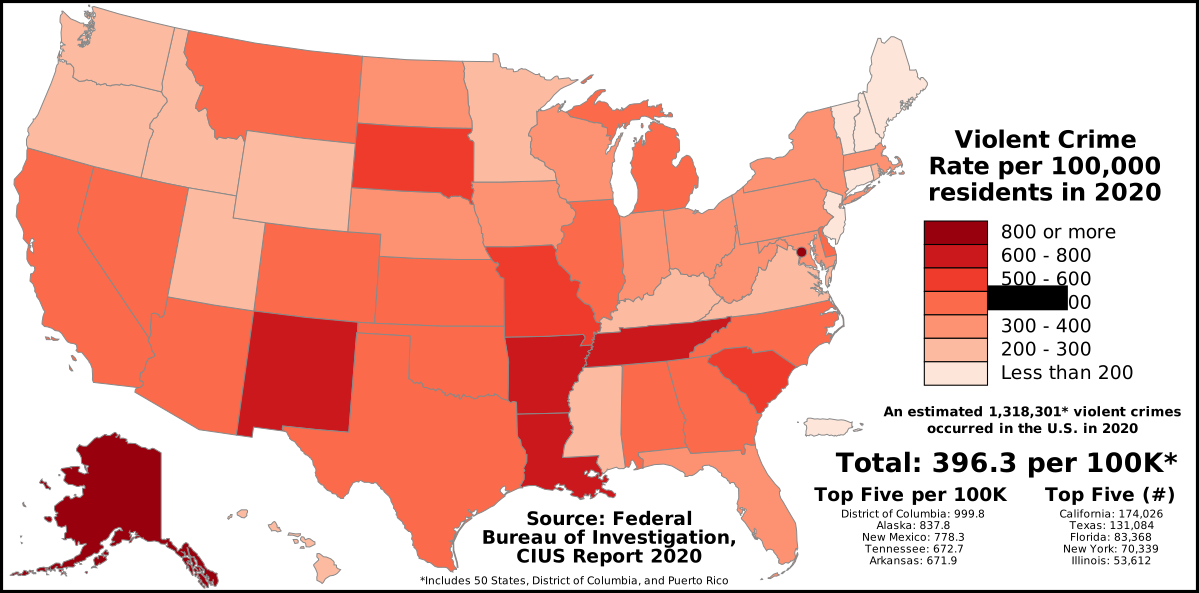

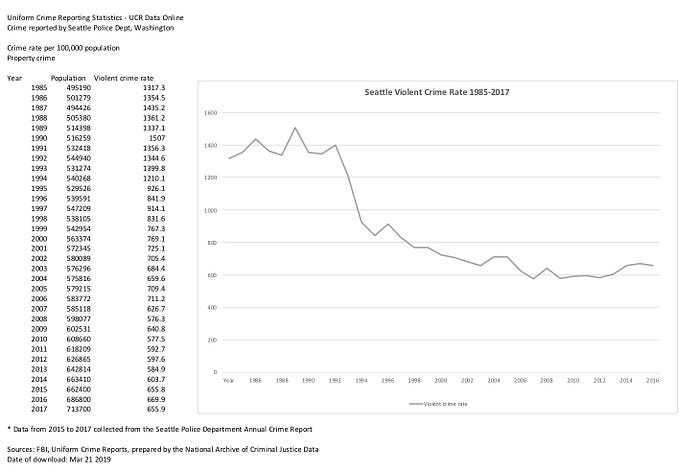

But I will tell you my perspective.
As someone who grew up in the "be back home in time for supper" 1970s, today's world seems completely foreign. When I started kindergarten, Mom walked me to school on the first day so that I'd know the route. And after that I walked to school on my own until I learned to ride a bike.
I rode to junior high, where there was parking for hundreds of bikes. Recently I drove by that school, and the bike racks were gone. This whole concept of waiting in traffic to pick up or drop off your kid wasn't even a thing.
And I'm so supremely grateful that I was raised that way. I'm absolutely certain that early autonomy paid off later in life in countless ways.
I'd encourage you, if you're raising kids, to consider the upsides of so-called "free range". Or, as we called it in the 70s, "being a regular kid".